It’s been a minute since I’ve shared a blog post! We’ve had a busy spring and summer, and I’m now welcoming a new season with a fresh routine and structure to my day. I’ve chosen to homeschool my oldest (age 6, first grade) again this year. This comes with mixed emotions, but ultimately I’m grateful for the opportunity to spend more time with him and engage him in his learning. He chose his curriculum with me and couldn’t be more excited to study a medieval time period. Our day is filled with knights, dragons, and castles and he couldn’t be more excited!
(This post includes affiliate links. I earn from qualifying purchases).
I wanted to share with you some research that revolutionized my teaching several years ago and how I’m incorporating that research into my own family and our own learning. Stanford University psychologist Carol Dweck has gained in popularity over the last decade or so on her research involving the power of mindset. I read her book, Mindset, and highly recommend it for people in all areas of life. I began using the growth mindset model in my teaching and saw a huge shift in motivation and self esteem in my students. After hearing some negative self talk from my oldest last year in kindergarten, I knew it was time to start incorporating this into our family as well.
What is a Growth Mindset?
A growth mindset is a belief that your intelligence and understanding can grow through effort. Though simple, this is a mindset that empowers kids to work hard, putting forth their best effort, knowing that they have an opportunity to “grow their brain”.. In contrast, a fixed minset is a belief that one’s abilities are what they are and are with limited ability to change one’s intelligence. How many of us grew up telling ourselves “I’m just not good at math”, or “reading is not my thing”? Those are fixed mindset beliefs.
How I Teach Kids about Mindsets
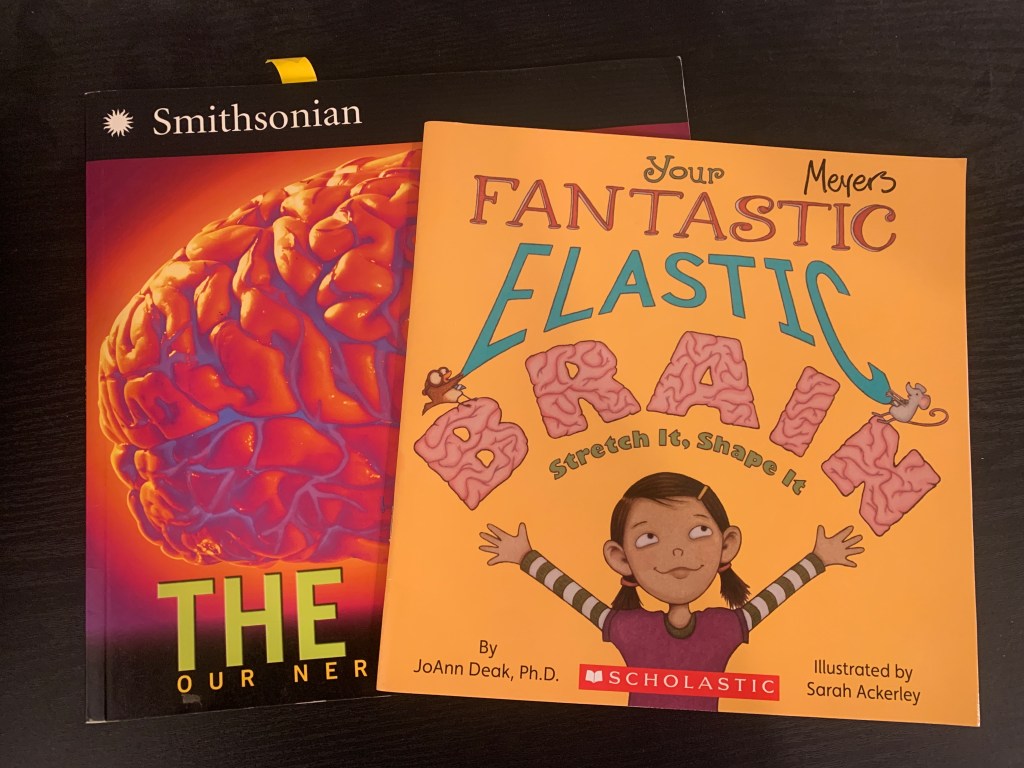
Whenever I teach kids about mindsets, I always start with giving them a general understanding about their brain. We have billions of neurons in our brain and body that build connections. We have the ability to grow new neuron connections in our brain when we practice and learn new things. I have a fun plush neuron we call Neuronia to help understand this concept, and I use these two books (The Brain, by Seymour Simon and Your Fantastic Elastic Brain by JoAnn Deak) to look at real pictures and explain how we can grow our brain.

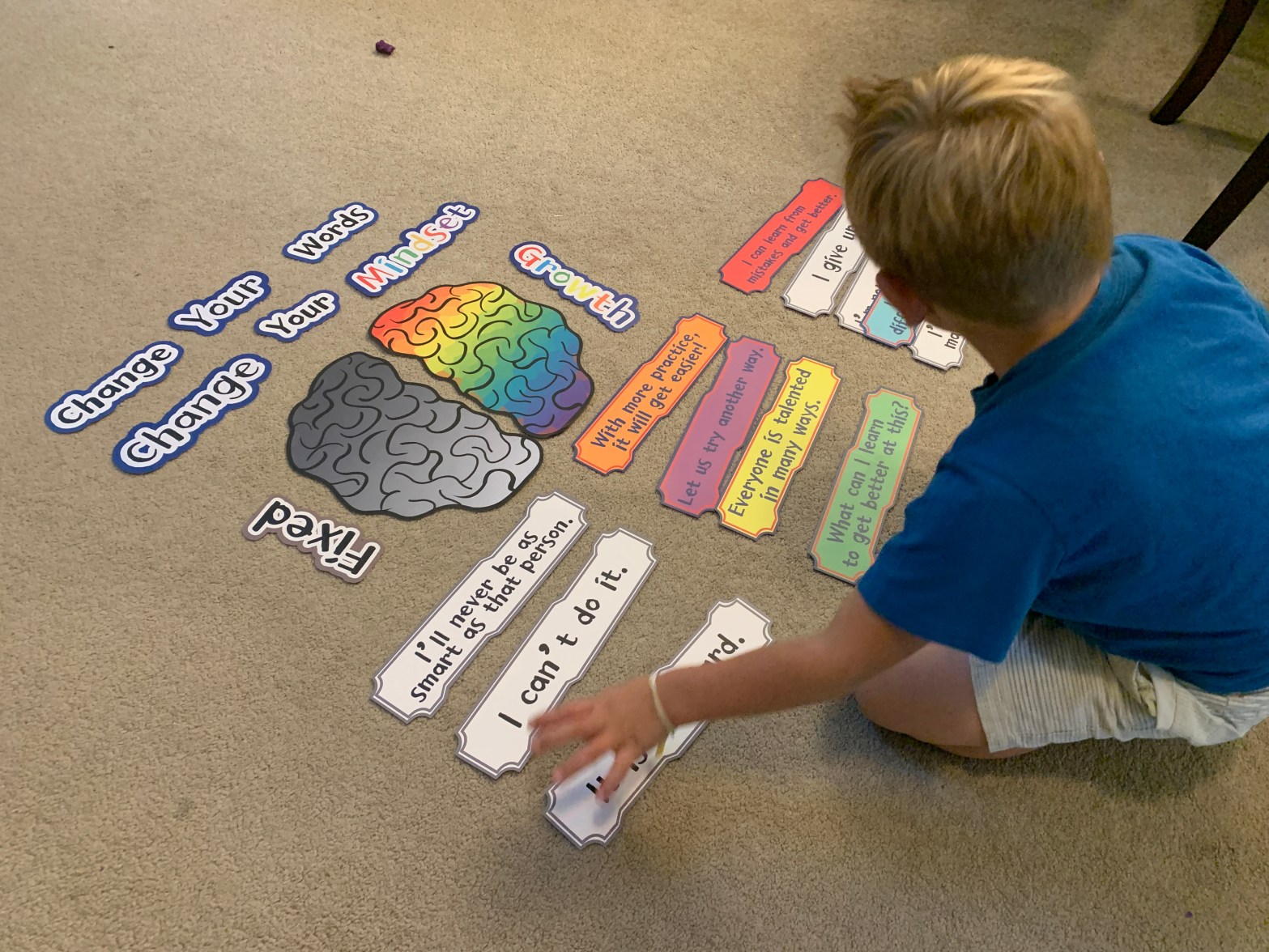
After we had an understanding about neurons and discussed parts of the brain, we introduced the concept of a growth vs. fixed mindset and how our mindset can help motivate us to work hard and grow our intelligence. I realized the materials I used in teaching 3rd and 4th grades were a bit advanced for my 1st grader, so.I went in search for some new age appropriate growth mindset tools. I ended up purchasing a set of materials from Big Life Journal. I laminated quite a few of these resources, and we use them little by little on a daily basis to help train our brain to use a growth mindset when things are tough. It also comes with great lists of books, shows, and movies that promote a growth mindset. Here are some examples of a few of the materials we use!


Here are just a few examples of some of the things my oldest is using for self-talk.
- Mistakes are how I learn!
- I am brave enough to try.
- I haven’t figured it out YET.
- I get better at things when I practice.
- I grow my brain by learning hard things.
We have also started listening to the Big Life Journal podcast in the car! These are great short stories about real people and kids who have used a growth mindset to accomplish difficult things. The podcast is engaging and fun, and I highly recommend it!
Mistake Jar
My son is one of those kids where learning comes naturally to him and he has started to have high expectations of himself to learn quickly with perfection. He can be often resistant to correction and is easily frustrated with mistakes. This was one of the reasons I knew we needed to start growth mindset learning immediately! We spent considerable time discussing how mistakes help build the neuron connections needed to help our brain grow. Instead of telling him that “it’s ok to make mistakes” or “everybody makes mistakes” we celebrate them and talk about how his brain is growing! We started a mistake jar where every time he makes a mistake in his learning he gets to put a Pom Pom in the jar. When the jar is full he gets a reward. This has been revolutionary in our homeschooling, and I no longer have to work through high levels of frustration but get to celebrate his new learning with him.

This is a very brief snapshot of growth mindset – feel free to reach out with any questions! I truly believe in this research and have seen amazing transformations as a teacher and now as a mom.
 Kristen's Korner